
Sports
Week 10 Team of the Week winner: Raymondville Bearkats
By Jasmine Lee
Advertisement · Why this ad?
Tyler Johnson has a background in sports journalism with a focus on college athletics, having worked for the Texas Tribune and the San Antonio Express-News. He earned his degree in Journalism from Texas State University and has reported on collegiate sports for over 5 years.
More from Tyler →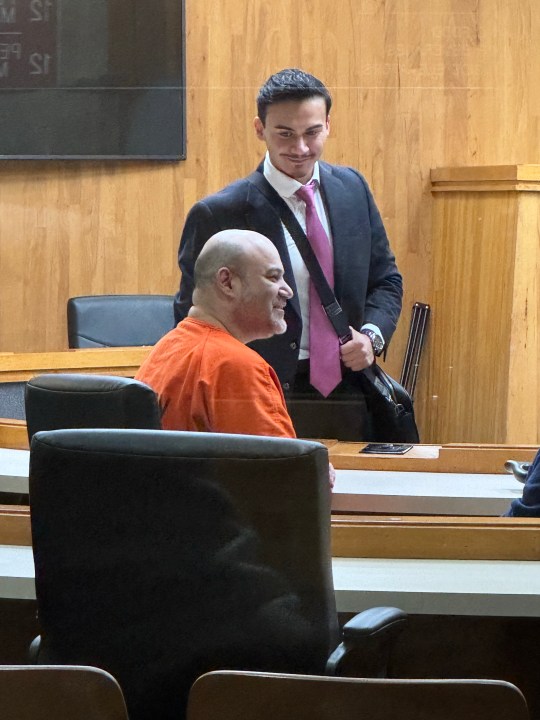
As the sun dipped below the horizon in Harlingen, casting long shadows over the courthouse, a palpable tension filled the air. Families gathered outside, clutching each other tightly, some whispering prayers while others exchanged somber glances. This was not just another day in the Texas legal system; it was a pivotal moment for the community as the Cameron County District Attorney's Office prepared to argue against a motion to delay the execution of John Allen Rubio, a name that has echoed through the halls of justice for far too long.
On October 28, 2023, the legal saga surrounding John Allen Rubio took another dramatic turn. His defense team filed a motion with the Texas Court of Criminal Appeals, seeking to pause his execution date, which had been set for later this year. The motion cited various reasons, including claims of ineffective counsel during previous trials and new evidence that they argue warrants a closer examination of his case. However, the Cameron County District Attorney's Office, led by District Attorney Luis Saenz, is firmly opposing this request.
In court documents, Saenz emphasized the importance of moving forward with the execution, arguing that Rubio's crimes were heinous and that the victims' families deserve closure. Rubio was convicted in 2008 for the brutal murders of three children, a case that has haunted Brownsville and its surrounding communities. The DA's office is adamant that delaying the execution would only prolong the agony for those who have suffered the most from Rubio's actions.
“This is not just about legal technicalities; this is about justice for the victims and their families,” Saenz stated in a recent press conference. “We owe it to them to see this through.” The emotional weight of these words resonates deeply within a community still grappling with the aftermath of such a tragic event.
The response from the Brownsville community has been mixed, reflecting the complexities of the case. Many residents express a strong desire for justice, feeling that the execution is a necessary step toward healing. “We cannot forget what he did,” said Maria Gonzalez, a local resident who remembers the outpouring of grief that followed the murders. “It’s time for the families to find peace.”
Conversely, there are voices advocating for a reevaluation of Rubio's case, emphasizing the importance of ensuring that justice is served fairly. “The legal system is not infallible,” noted Dr. Juan Ramirez, a professor of criminal justice at the University of Texas Rio Grande Valley. “We have to be cautious about moving forward with an execution when there are questions about the fairness of the trial.” Dr. Ramirez's concerns echo a growing sentiment among some community members who fear that rushing to execute could lead to irreversible mistakes.
Rubio's case has become a focal point in discussions about the death penalty in Texas, a state that has seen its share of controversial executions. The history of capital punishment in Texas is fraught with cases that have been overturned due to new evidence or procedural errors. This reality adds another layer of complexity to the current situation, as some residents advocate for a more humane approach to justice.
“We need to learn from the past,” said local pastor David Martinez, who has been a vocal advocate for criminal justice reform. “Every life is precious, and we need to ensure that we are not making decisions that we might regret later.” Pastor Martinez's words resonate with those who believe in the possibility of redemption and the importance of a fair legal process.
At the heart of this case are the families of the victims, who continue to bear the emotional scars of the tragedy. The loss of three innocent lives has left an indelible mark on the community. Family members of the victims often share their stories, recounting the joy their loved ones brought into their lives and the deep void left in their absence. “There is not a day that goes by that I don’t think of them,” said Elena Rodriguez, a relative of one of the victims. “We are still trying to heal, but it’s hard when the pain is so fresh.”
Elena and others have become advocates for justice, attending court hearings and public meetings to voice their support for the execution. They believe that seeing justice served is a crucial part of their healing process. “We want to honor their memory,” she said. “Justice is the only way we can do that.”
The Texas Court of Criminal Appeals will ultimately decide whether to grant the motion to pause Rubio's execution. As the community waits for this critical decision, the emotional stakes remain high. Families of the victims continue to seek closure, while advocates for justice reform push for a thorough examination of the case. The court's ruling will not only affect Rubio but could also set a precedent for how similar cases are handled in the future.
As the legal proceedings unfold, the Cameron County District Attorney's Office is preparing to present its case vigorously. Saenz and his team are committed to ensuring that the voices of the victims are heard loud and clear in the courtroom. “We will fight for justice, and we will not back down,” Saenz asserted, reinforcing his commitment to the families affected by this tragic case.
In the meantime, community organizations, including the Cameron County Chamber of Commerce and local advocacy groups, are working to provide support for those impacted by the case. They are hosting discussions and forums to educate residents about the legal process and the implications of the death penalty. These conversations are crucial in fostering understanding and healing within the community.
As the date of the court's decision approaches, the residents of Brownsville find themselves at a crossroads. The outcome of this case will not only influence the future of John Allen Rubio but also reflect the community's values and beliefs about justice, mercy, and accountability. It is a moment that challenges the fabric of the community, urging residents to grapple with difficult questions about morality and the legal system.
In the coming weeks, many will gather in prayer, seeking strength and guidance as they navigate this tumultuous time. The hope is that whatever the court decides, it will bring some semblance of closure to the families who have suffered so deeply. “We have to trust the system,” said Gonzalez, “but we also have to remember that we are all human.”
The community's resilience is evident as they stand united, ready to face whatever lies ahead. The conversation surrounding justice continues, and as Brownsville watches closely, the implications of this case will undoubtedly echo for years to come, shaping the narrative around justice in the region.
This case is not just about one individual or the heinous acts he committed; it reflects broader societal issues regarding the death penalty and its application. In Texas, the death penalty has long been a contentious topic, with advocates arguing for its abolition while opponents cite it as a necessary tool for justice. The outcome of Rubio's case could reignite debates on capital punishment, influencing lawmakers and activists alike.
Moreover, this situation underscores the need for reform in the legal system, particularly regarding how cases are prosecuted and how defendants are represented. Advocates for change argue that the system must ensure that all individuals receive fair representation, regardless of the severity of their crimes. The discussions sparked by Rubio's case could lead to a renewed focus on these critical issues, prompting both the community and the state to reevaluate their positions on justice and punishment.
By Jasmine Lee

By Elena Huerta

By Marcus Lee
By Samuel Garcia